
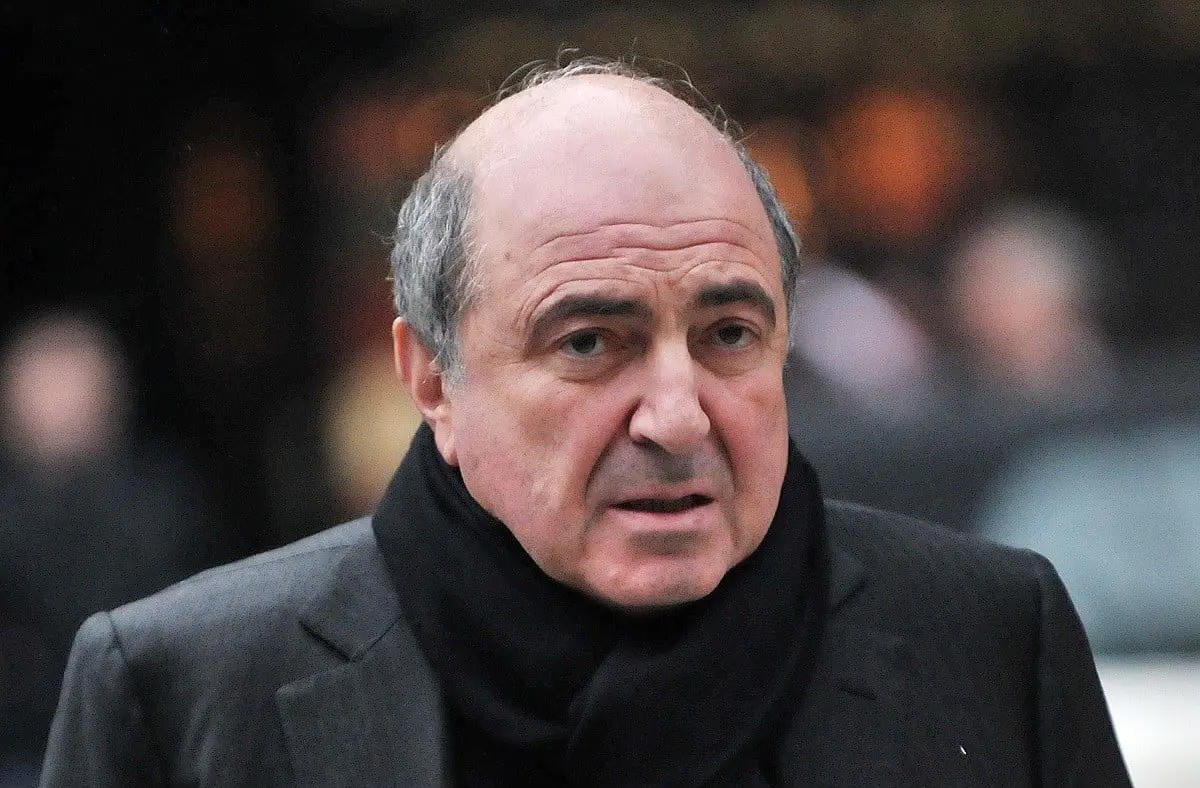
Boris Berezovsky’s journey from a mathematician to a powerful oligarch encapsulates the volatile nature of Russian political and business landscapes. Once a kingmaker with significant influence over the nation’s media and politics, his rapid descent into exile and financial ruin serves as a cautionary tale of betrayal and the perilous fate of those who navigate such treacherous waters. More than a decade after his death, Berezovsky’s legacy resonates amidst a growing pattern of violence and suspicion surrounding the upper echelons of Russian society.
A Mathematician Turned Opportunist
Boris Berezovsky was born into a Jewish family in Moscow in 1946, showcasing early aptitude in mathematics and engineering. He worked at the USSR Academy of Sciences, eventually leading a department at the Institute of Control Sciences by the late 1980s, where he published numerous academic papers and books.
However, the winds of change were stirring with Mikhail Gorbachev’s perestroika reforms. As restrictions on private enterprise eased, Berezovsky seized the opportunity to pivot from academia to business. In 1989, he co-founded LogoVAZ with Badri Patarkatsishvili, navigating the economic chaos of the collapsing Soviet Union by delaying payments, taking advantage of rampant hyperinflation.
By 1994, LogoVAZ emerged as Russia’s largest car dealership, closely associated with AvtoVAZ, the manufacturer behind the iconic Lada brand. This marked a classic Berezovsky move: exploiting instability for profit.
Today, the legacy of that enterprise echoes amid the Kremlin’s re-nationalization of AvtoVAZ, highlighting the cyclical partnership between the Russian state and its oligarchs.
Surviving Assassination… And Entering Power
Berezovsky’s ascent was fraught with peril. In 1994, a car bombing targeted him, killing his driver and almost claiming his own life. This marked his entry into Russia’s perilous political scene.
Leveraging his connections, he gained access to President Boris Yeltsin’s inner circle by the mid-1990s, expanding his influence through media, particularly after taking control of ORT (Channel One), Russia’s leading television network. This granted him a powerful tool beyond wealth: control over public narrative.
The “Davos Pact” And The Birth Of Modern Media Manipulation
In 1996, Berezovsky became a key player in the “Davos Pact,” a coalition of oligarchs aimed at ensuring Yeltsin’s re-election amidst rising communist opposition. They deployed their media assets to manipulate public sentiment, smear opponents, and amplify fears of a Soviet resurgence.
This strategy proved successful, securing Yeltsin’s victory and establishing a framework for state-influenced media that endures in Russia today.
The Creation Of Vladimir Putin
By the late 1990s, Berezovsky had become part of an elite group dubbed “The Family,” collaborating to select Boris Yeltsin’s successor. That successor was Vladimir Putin, whom Berezovsky had known since the early 1990s and helped propel into the prime ministership in 1999.
Utilizing his media empire to boost Putin’s profile ahead of the 2000 presidential election, Berezovsky essentially transformed ORT into a propaganda machine. Putin won, but their alliance would quickly deteriorate.
Fast Friends, Faster Enemies
Within weeks of taking office, Putin faced criticism from Berezovsky, who opposed his increasingly authoritarian methods. As Putin campaigned against oligarchic power, investigations into Berezovsky’s business dealings commenced, culminating in criminal charges. By 2001, he fled Russia, ultimately seeking asylum in the United Kingdom, where he witnessed the dismantling of his assets and media empire.
Exile, Courtroom Wars, And Financial Collapse
In London, Berezovsky reinvented himself as a vocal critic of Putin, yet his influence waned. He sold significant assets, including his stake in ORT to Roman Abramovich, and exited his position in oil giant Sibneft for an estimated $1.3 billion.
This later led to a protracted legal battle with Abramovich, resulting in one of the largest civil cases in British history, in which Berezovsky ultimately lost, severely impacting his fortune. By then, his net worth had plummeted from a high of $3 billion.
The Litvinenko Connection
Among the most shocking incidents connected to Berezovsky was the assassination of former FSB agent Alexander Litvinenko, who accused Russian security services of targeting him. Litvinenko was poisoned with radioactive polonium in London in 2006, and investigations pointed towards Kremlin involvement.
A 2016 UK public inquiry concluded that Putin and security chief Nikolai Patrushev likely “approved” the act. Litvinenko had resided in a property linked to Berezovsky at the time of his death.
The Final Collapse
By the early 2010s, Berezovsky faced overwhelming legal pressures, asset losses, and personal crises, including a costly divorce. Reports indicated he was effectively bankrupt by 2013, when he was found dead in his Berkshire home, with a ligature around his neck—though the official ruling remained an open verdict.
Friends noted his state of despair and isolation in his final days, with reports of him trying to sell personal belongings and even a letter purportedly seeking forgiveness from Putin. Analysts suggest this might have been manipulated by Kremlin sources as a warning to others.
The Abramovich Irony
Roman Abramovich, once Berezovsky’s protégé and later adversary, encountered his own downfall post-2022 invasion of Ukraine, facing sanctions, asset freezes, and even a suspected poisoning during peace negotiations.
Abramovich’s trajectory mirrors Berezovsky’s in many respects, although their fates culminate differently.
The Prototype
More than ten years after his demise, Boris Berezovsky’s story has evolved into a broader commentary on the Russian political landscape. He stands as a prototype of a system that dispenses rewards for allegiance while meting out punishment for dissent, leaving little room for former allies who step out of line.
Those who helped build modern Russia believed they held the reins of power. Berezovsky learned, too late, that the system they engineered would ultimately control their destinies instead.

John is a seasoned journalist at The Bothside News, specializing in balanced reporting across news, sports, business, and lifestyle. He believes in presenting multiple perspectives to help readers form informed opinions. His work embodies the publication’s philosophy that truth emerges from examining all sides of every story.


