
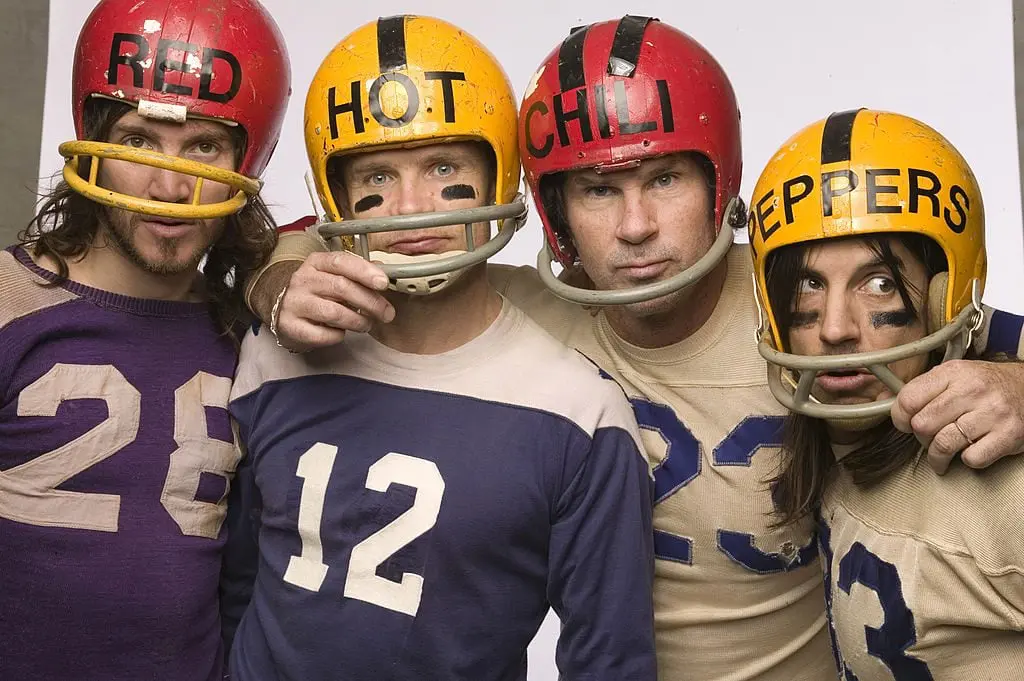
The Red Hot Chili Peppers have transformed from chaotic punks of the Sunset Strip into one of the most commercially successful rock bands in history. Despite the struggles of addiction, lineup changes, and personal tragedies, they have endured, continually evolving while maintaining a significant global following. Their journey, marked by creativity and resilience, is set to be highlighted again in a 2026 documentary that focuses on the band’s origins and the loss of founding guitarist Hillel Slovak.
The Origins of an Iconic Band
The Red Hot Chili Peppers, formed in 1983, originated when four friends from Los Angeles’ Fairfax High School, Anthony Kiedis, Flea, Hillel Slovak, and Jack Irons, decided to start a band. They debuted under the whimsically fitting name “Tony Flow and the Majestic Masters of Mayhem,” performing for a mere 30 people. During an improvisational funk-punk jam, Kiedis recited his poem “Out in L.A.,” captivating the audience and securing a return show—the band was born.
Chaos soon followed as Slovak and Irons departed to pursue other projects, only to return later. The lineup saw numerous changes, with guitarists being hired and dismissed in quick succession. During this tumultuous period, Kiedis and Slovak found themselves grappling with heroin addiction.
Despite the turmoil, the band’s allure lay in their electrifying live performances, where unpredictability was the norm. Kiedis once remarked that if a performer left the stage bleeding, they knew they had done their job.
The band’s first major crisis struck on June 25, 1988, when Hillel Slovak died of a heroin overdose. Irons exited the band soon after, leaving Kiedis devastated and prompting him to leave Los Angeles. For a moment, it appeared that the Red Hot Chili Peppers might not survive.
The Rise of a New Era
Instead of disbanding, the Chili Peppers reinvented themselves. Kiedis and Flea discovered a young virtuoso named John Frusciante, who brought a fresh sound and technical skill to the group, while drummer Chad Smith completed the classic lineup.
Producer Rick Rubin, who had initially declined to work with them, took the helm, moving the band into a mansion once owned by Harry Houdini to establish a recording studio. This collaboration resulted in the groundbreaking 1991 album “Blood Sugar Sex Magik,” which included hits like “Give It Away” and “Under the Bridge,” selling over 13 million copies worldwide and launching the Chili Peppers into the global spotlight.
However, just as fame found them, it unraveled again when Frusciante left the band in 1992, ushering in another unstable period characterized by the Dave Navarro era and the less cohesive album “One Hot Minute.” By the late 1990s, the group teetered on the brink of collapse, with Frusciante struggling with severe addiction.
Flea opined that the band could not continue without Frusciante, who eventually rehabilitated and rejoined, leading them into their most successful phase.
Global Dominance and Financial Success
With Frusciante’s return, the Chili Peppers reached unprecedented heights in creativity and commercial success. The 1999 album “Californication” sold over 15 million copies, featuring multiple hits such as “Scar Tissue,” “Otherside,” and the title track. They evolved towards a melodic yet polished sound while retaining their unique identity.
Following “Californication,” the band released “By the Way” in 2002 and the colossal double album “Stadium Arcadium” in 2006, further reinforcing their status as one of the biggest rock bands in the world. Their tours became monumental events, with a three-night stint at London’s Hyde Park gathering over 250,000 fans, generating significant ticket sales.
Consequently, the Red Hot Chili Peppers transitioned from merely a band to a global business entity.
A Modern Financial Empire
While their musical achievements are noteworthy, the band’s financial evolution in the past decade may be even more significant. After Frusciante’s departure in 2009 and a decade with guitarist Josh Klinghoffer, the band made a pivotal move in 2019 by welcoming Frusciante back for a third time, reigniting their momentum.
In 2022, they released two albums, “Unlimited Love” and “Return of the Dream Canteen,” which fueled a global stadium tour that became their highest-grossing to date, amassing over $350 million. Behind the scenes, the band made strategic financial maneuvers as well.
In 2021, they sold their publishing catalog for around $140 million, ensuring a lucrative upfront payment while still securing ongoing royalties. Additionally, they are reportedly considering selling their recorded music masters for approximately $350 million, although this deal has yet to be officially completed.
Combined with their extensive touring revenue and licensing deals, the Chili Peppers’ total music-related asset value is nearing half a billion dollars, and both Kiedis and Flea boast substantial personal fortunes in the nine-figure range—an impressive feat for a band that once played for just 30 fans on the Sunset Strip.
Enduring Legacy
More than 40 years after their inception, the Red Hot Chili Peppers remain active, relevant, and creatively engaged. Having navigated tumultuous personal and professional challenges, the band continues to pursue the same goal they set out to achieve in 1983: a groove. As they evolve and endure, they stand as one of the largest rock bands in the world.

John is a seasoned journalist at The Bothside News, specializing in balanced reporting across news, sports, business, and lifestyle. He believes in presenting multiple perspectives to help readers form informed opinions. His work embodies the publication’s philosophy that truth emerges from examining all sides of every story.


