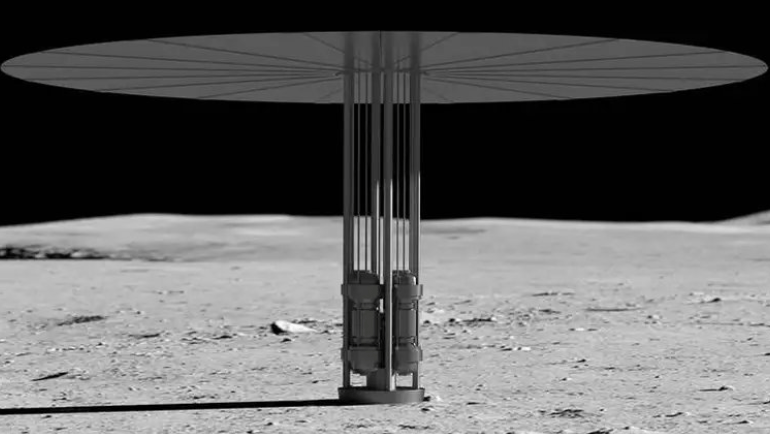
The US space agency NASA has now announced its decision to put a “durable, high-power, sun-independent” fission reactor onto the Moon, positively before 2030. So, by any chance, if you’ve been sketching blueprints for a portable nuclear fission power plant, this is your time to shine. The only condition is that NASA should be able to carry it to the Moon in a 12-foot-long by 18-foot-wide rocket!
According to a statement from the Department of Energy’s Idaho National Laboratory (INL) on Nov. 19, the lab is teaming up with NASA to put a “durable, high-power, sun-independent” fission reactor onto the moon within the next 10 years. The two agencies are currently seeking proposals from outside partners to get this lofty project started, with a submission deadline of Feb. 19, 2022.
This hypothetical reactor would help turn the moon into an extraterrestrial base for human space exploration, including future manned missions to mars , agency official said .
On November 19, the INL released a statement saying they are “seeking industry partners to design nuclear power systems for lunar applications.” The request for reactor designs on behalf of NASA and a contractor of the DOE is open until February 19, 2022.
The US hopes to have the first long-term presence on the Moon in the near future. To succeed, they will most likely need a power source. Wind or hydro-powered sources are impossible because of, well, the absence of both wind and water on the Moon. Fossil fuels are far-fetched, too, because of how expensive it would be to carry them off to the Moon. So, the only option that remains is nuclear power.
The reactor will be built on Earth and then launched to the Moon, where it will be required to generate 40 kilowatts of continuous electric power for ten years. The reactor must include temperature controls as well to keep the device cool. Lastly, it must have the structural integrity to hold out against its launch from Earth and landing on the Moon.