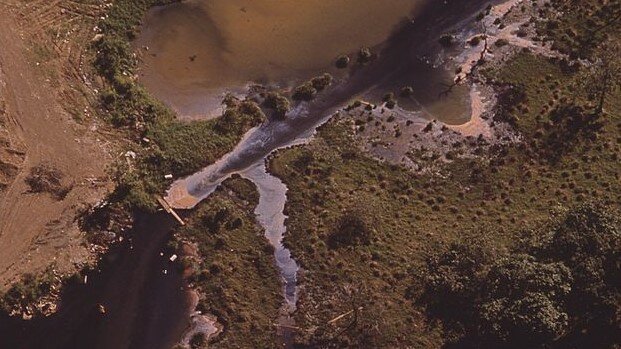
A 10-member expert committee led by Meghalaya’s Principal Chief Conservator of Forest (PCCF) B K Lyngwa will soon develop an action plan to restore polluted water bodies in the northeastern state. The committee, which was formed in June in response to a High Court order to advise the state government on measures for the restoration and protection of water bodies in the state, will advise the state government on the most recent technology and methods for cleaning and rejuvenating water bodies.
Lyngwa stated on Thursday, after chairing the committee’s second meeting, “We are currently developing an action plan. The issue of funding will be addressed later.” According to him, the action plan will be site specific to each river and will cover the entire state, except for water bodies in wildlife protected areas, reserved forests, and waterbodies dealt with by the State Wetland Authority and River Rejuvenation Committee, as well as fishponds.
The Umkhrah, Umshyrpi, Umtrew, Lukha, and Myntdu rivers in Meghalaya have been excluded from the purview of this committee. This committee also excludes 53 wetlands managed by the Wetland Authority and over 60 rivers from its jurisdiction. “The action plan will be divided into four categories,” said the principal chief conservator of forests. “One will be advisory in nature, second will be regulatory in nature, third will be participatory in nature, and fourth will be restoratory in nature.”
Lyngwa also stated that the committee is in the process of requesting information about such bodies of water from the deputy commissioners. East Jaintia Hills, East Garo Hills, South Garo Hills, North Garo Hills, South West Garo Hills, and West Garo Hills are among the districts that have submitted a list of water bodies. The other districts have clubbed fishponds, resulting in distorted figures, and the committee has decided not to consider the information.
“We have given these districts 10 days to submit the required information in the format (given to them),” he said. The chairman also stated that studies will be conducted in two seasons – dry and rainy – to collect baseline data on pollution and other issues. It is expected to be finished in six months. Meanwhile, expert member Nababrata Bhattacharjee stated that over 10,000 water bodies were listed in the previous report submitted by the districts prior to the committee’s formation. However, the majority were depicted as “fishponds,” which were not taken into account. Bhattacharjee, who also serves as the chairman of the State Expert Appraisal Committee, stated that a format has been sent to all deputy commissioners outlining the parameters for how they should be evaluated.
(source : PTI)