
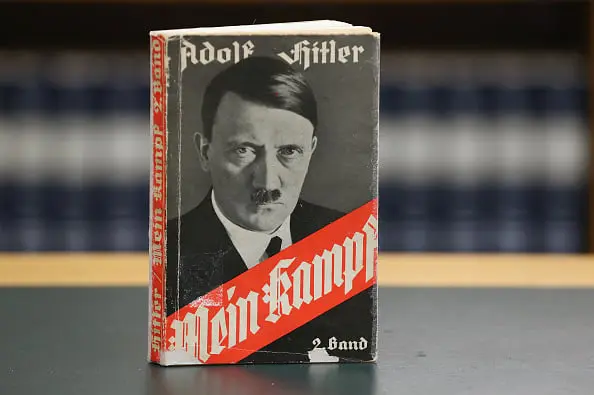
Adolf Hitler, infamous for his role in history, was also one of the wealthiest authors of his time. His bestselling book, “Mein Kampf,” significantly funded the early Nazi Party and shaped his future influence. As e-books gain popularity today, questions arise about who benefits from the ongoing sales of this controversial work and what its legacy entails.
The Financial Impact of “Mein Kampf”
Few realize that Adolf Hitler’s “Mein Kampf” not only contributed to his infamy but also made him a millionaire long before he became Germany’s dictator. The royalties from the book were instrumental in financing his rise to power, providing him with substantial wealth that enabled a lavish lifestyle filled with luxury vehicles and grand estates.
Initially released in 1925, “Mein Kampf” saw modest sales of 9,000 copies in its first year, yielding no royalties for Hitler. However, as his political influence grew, so did book sales. By 1933, the same year he assumed the role of Chancellor, sales surged to over 850,000 copies. The German government became his largest customer, purchasing millions of copies to propagate his ideologies, including gifting a free copy to every married couple — a cost borne by the German taxpayer.
At the peak of his book sales, Hitler was earning over $1 million annually from “Mein Kampf,” equivalent to approximately $23 million in 2026 purchasing power. By his death in 1945, royalties from the book had amassed to 7.8 million Reichsmarks, a figure that translates to around $220 million in today’s dollars.
International Royalties and Modern-Day Sales
Even after 1939, Hitler continued to receive international royalties, albeit in lesser amounts. His UK royalties from 1933 to 1938 alone amounted to about $500,000 in today’s currency. The U.S. government intervened during World War II, seizing approximately $255,000 of his publishing royalties under the “Trading with the Enemy Act” and redistributing the funds to war charities.
With “Mein Kampf” entering the public domain on January 1, 2016, anyone can publish and sell the book. While mainstream publishers tend to donate profits to educational and charitable causes, many independent publishers benefit financially from selling digital versions, further complicating the legacy of Hitler’s work.
The Legacy of Hitler’s Wealth
Hitler’s nephew, Leo Raubal, was legally entitled to his royalties after Hitler’s death but refused to accept the “blood money.” Consequently, Bavaria seized the copyright for “Mein Kampf,” effectively blocking its publication in Germany for decades. As a result, any remaining residual profits are channeled to charity today.
Hitler also reaped considerable income by licensing his image for propaganda, allowing his likeness to appear on stamps and political posters. This arrangement generated significant funds, enhancing his wealth further. While some of his early paintings still circulate, most of his descendants have chosen to live under assumed names, maintaining a silence on profiting from their notorious lineage.
Conclusion
Hitler’s financial ascent was intricately tied to the dissemination of “Mein Kampf.” The book not only established his fortune but also remains a part of a complex legacy, making contemporary discussions about his royalties particularly poignant. Ironically, the proceeds from this contentious work now support humanitarian efforts aimed at ensuring that ideologies like Hitler’s do not resurface.

John is a seasoned journalist at The Bothside News, specializing in balanced reporting across news, sports, business, and lifestyle. He believes in presenting multiple perspectives to help readers form informed opinions. His work embodies the publication’s philosophy that truth emerges from examining all sides of every story.


