Delay in NASA's moon rocket launch due to tropical weather
The objective of Artemis 1, which is named after Apollo's twin sister, is to test the SLS rocket and the Orion crew capsule that is mounted on top of it. On the expedition, mannequins are taking the place of astronauts, and they will measure the levels of acceleration, vibration, and radiation.
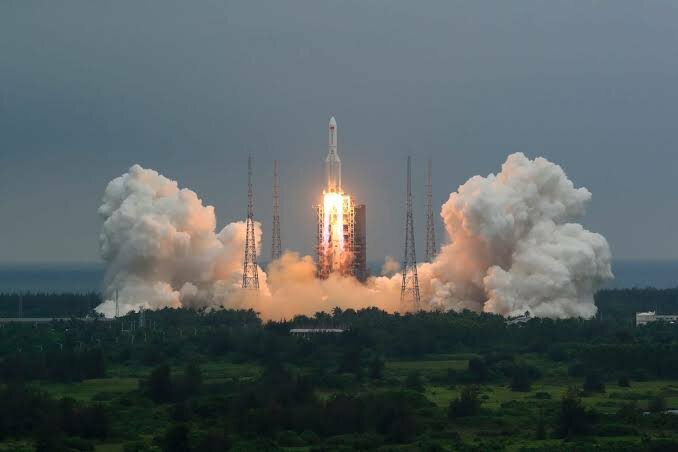
As Tropical Storm Nicole barreled toward Florida's east coast on Tuesday, NASA once more postponed its long-delayed unmanned mission to the Moon, according to officials.
Jim Free, a senior officer at the US space agency, said on Twitter that a launch attempt that was originally planned for November 14 will now happen on November 16.
The eagerly anticipated launch has already been postponed three times in as many months.
Writer Free, who works for NASA as the Associate Administrator for Exploration Systems Development, stated that "our people are the most vital component of our mission." By shifting the launch date of #Artemis I, we put employee security first and give our team more time to care for their families and personal needs.
The National Hurricane Center predicted that the storm in the Atlantic Ocean would intensify into a hurricane Wednesday night or early Thursday morning near the Bahamas before reaching landfall in Florida. Near the Kennedy Space Center, where the rocket — NASA's most potent ever — is scheduled to launch, a hurricane warning has been issued.
Nicole is getting stronger, so according to a statement from NASA on Tuesday night, "NASA... has opted to re-target a launch for the Artemis I mission for Wednesday, Nov. 16 pending safe conditions for staff to return to work, as well as inspections after the storm has passed."
According to NASA, a launch that takes place during a two-hour window that begins at 1:04 am EST (06:04 GMT) on November 16 will result in a splashdown on December 11 on Friday.
On November 19, a backup launch date has been scheduled.
The enormous SLS rocket, which had been positioned on the launch pad some days before, will remain there, according to NASA.
The rocket had to be brought back to the Vehicle Assembly Building to be shielded from Hurricane Ian after two launch attempts this summer were aborted due to technical issues.
The 322-foot (98-meter) rocket was rolled back out last week on a sizable platform called the crawler-transporter that was built to reduce vibrations.
Nicole had sustained winds of about 65 miles per hour (100 kilometres per hour) earlier on Tuesday, and the NHC predicted that they would only get stronger.
Some experts are worried that if the rocket, which is expected to cost several billion dollars, is left uncovered, hurricane debris could harm it.
According to lead rocket engineer John Blevins, "as far as staying at the pad, we want to see peak winds less than 74.1 knots, and that's kind of the key criterion that we're watching."
According to NASA, the SLS rocket is built to endure winds of up to 74.4 knots at a height of 60 feet. The spaceship hatches have been sealed to keep water out, and it is made to survive torrential downpours at the launch pad.
Five decades after the last time people set foot on the moon, the unmanned Artemis 1 mission will get the US one step closer to sending astronauts back.
The objective of Artemis 1, which is named after Apollo's twin sister, is to test the SLS rocket and the Orion crew capsule that is mounted on top of it.
On the expedition, mannequins are taking the place of astronauts, and they will measure the levels of acceleration, vibration, and radiation.
What's Your Reaction?