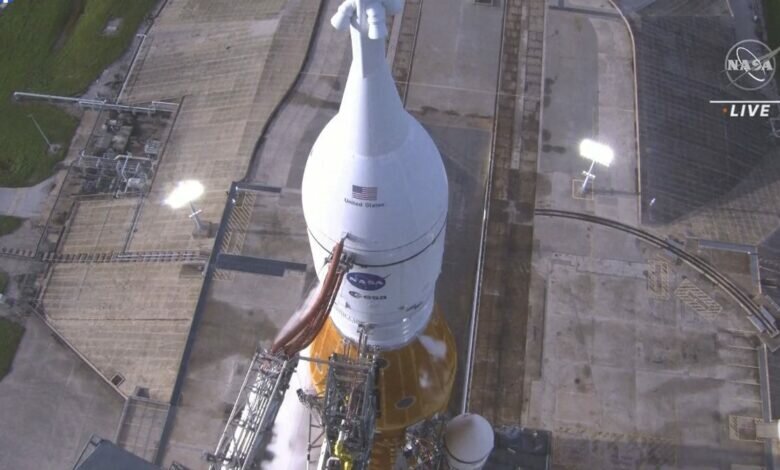
NASA’s new rocket, the Artemis 1 coupled with Space Launch System, was set to launch its first mission on Monday. But an engine problem forced the space agency to postpone the event for at-least four days. The SLS, which will eventually replace the space shuttle fleet, is designed to carry astronauts to the International Space Station, but will also be used for deep space missions around the moon orbit. The first test flight of the SLS, was originally planned for this month. NASA’s new rocket engine, which was designed to power the Space Launch System, or SLS, was failing at such an important moment.
The delay was a setback for NASA, which had planned to launch a new rocket on the historic mission to the moon. The agency had been touting the test flight as a major step forward in its mission to send humans beyond Earth orbit again. The new rocket, the largest to be built in the United States since the Saturn V, was supposed to launch from NASA’s Kennedy Space Center on Tuesday on a test flight that would have taken it more than 50 miles into the air. But on Sunday night, the rocket’s engine failed, leaving only one other engine to propel the rocket.
Sunday’s rocket launch was originally planned for 8:33 AM EST (1233 GMT). However, a temperature issue with an engine on the rocket was discovered just before liftoff. The problem was discovered after engineers observed a delay in the ignition sequence of the rocket.
A department of the U.S. space agency has postponed the planned lift-off of NASA’s new rocket after a gas leak was discovered in an engine. The planned Friday launch of the rocket to take cargo to the International Space Station had been postponed a day earlier after engineers discovered a problem with one of the four engines on the first stage of the rocket. Launch controllers later announced that they had halted the countdown at 8:33 a.m., at T-8 minutes, to discuss a “disruption plan” at the Kennedy Space Center in Florida.