The largest known new meteorite strike on Mars has been discovered by researchers
Curtin University researchers have assisted in the finding of the largest fresh meteorite impact craters on Mars, one of which included ice at the lowest altitude ever detected,
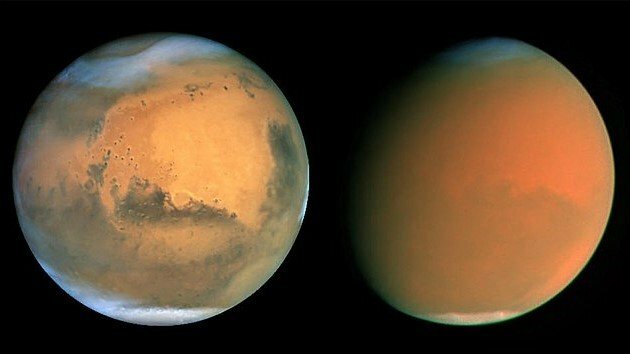
Curtin University researchers have assisted in the finding of the largest fresh meteorite impact craters on Mars, one of which included ice at the lowest altitude ever detected, since NASA's Mars Reconnaissance Orbiter began scanning the planet for them 16 years ago.
The two Curtin scientists were the only Australians on a NASA-led multinational study team that discovered two impact craters greater than 130 metres in diameter each that developed on Mars in the second half of 2021.
The craters were identified using NASA imaging technology as well as seismometers, according to Associate Professor Katarina Miljkovic of Curtin's Space Science and Technology Centre and the School of Earth and Planetary Sciences.
"In addition to NASA's Mars Reconnaissance Orbiter imager, the NASA InSight seismometers were operational in the second half of 2021, when these hits were recorded," Associate Professor Miljkovic explained.
"These impact occurrences were detected as large seismic activity or a 'boom,' first as the meteorite travelled through the atmosphere and then again as it hit the earth."
"Impact events occur on both Earth and Mars all the time, but they usually involve small pebbles from space that just brush the atmosphere." On rare occasions, we get collisions that can penetrate deeper into the atmosphere, resulting in a perceptible bang in the atmosphere or on the ground, as was the case here."
According to co-author PhD student Andrea Raji, who did the research while at Curtin's Space Science and Technology Centre, the meteorite strikes penetrated deeper into the planet, triggering the only two quakes known to have been triggered by meteorite impacts on Mars.
"There aren't that many significant quakes detected on Mars, whether they're caused by interior geological processes or, in this case, external impacts," Ms Rajsic explained.
"Impact events are very useful in seismology because they may be thought of as a restricted seismic source with a known location." This is a terrific approach to peer within Mars' inner structure."
One of the impacts, according to Associate Professor Miljkovic, excavated ice at the lowest altitude yet detected on Mars, which will help us comprehend the subsurface of Mars' water ice storage.
"This knowledge is useful for a variety of reasons, ranging from human future occupancy of Mars and their capacity to seek water as a resource to a fundamental understanding of Mars' structure as a planet." "If we are to comprehend the formation and evolution of our own planet, we must also understand the formation and history of other terrestrial planets," Associate Professor Miljkovic stated.
(source : ANI)
What's Your Reaction?