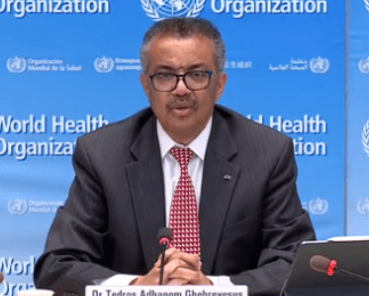
Tedros Adhanom Ghebreyesus will address a virtual press conference at 1300 GMT, the WHO announced in a statement late Friday.
The president of the World Health Organization is anticipated to announce on Saturday whether the organization has decided to label the outbreak as a global health emergency, the highest alarm it can issue in response to an uptick in monkeypox cases.
The WHO announced late Friday that Tedros Adhanom Ghebreyesus will speak at a virtual press conference at 1300 GMT.
It made no mention of the announcement’s content.
According to a count released on July 20 by the US Centers for Disease Control and Prevention (CDC), monkeypox has affected over 15,800 persons in 72 countries.
Since early May, there has been an increase in monkeypox cases outside of the West and Central African nations where the illness has long been endemic.
On June 23, the WHO established an emergency committee (EC) of experts to determine if monkeypox qualifies as a PHEIC, the highest degree of alert recognized by the UN health organization.
But the Tedros was told by the majority that the circumstances did not yet meet the criteria.
With the number of cases increasing, a second meeting was convened on Thursday, and Tedros expressed concern.
Tedros addressed the lengthy meeting, saying, “I need your opinion in appraising the immediate and mid-term public health ramifications.”
Late on Friday, a US health specialist issued a dire warning.
“An exponential increase of cases has been observed after the most recent #monkeypox EC a few weeks ago. In the upcoming weeks and months, there will unavoidably be a sharp increase in instances. Therefore, @DrTedros must issue a global warning “The WHO Collaborating Center on National and Global Health Law’s director, Lawrence Gostin, stated on Twitter.
“Global health will suffer severely if we do not act.”
Warning on discrimination
Monkeypox is a contagious viral infection similar to smallpox that was discovered in humans for the first time in 1970. Smallpox was eradicated from the world in 1980.
The largest study to date, involving 528 individuals in 16 nations, was published in the New England Journal of Medicine and found that 95% of cases were spread through sexual activity.
Approximately a third of those affected were known to have gone to sex-on-site locations like sex parties or saunas within the previous month. Overall, 98 percent of those infected were gay or bisexual men.
Tedros expressed concern that stigma and scapegoating could make the outbreak more difficult to monitor and said, “This transmission pattern represents both an opportunity to implement targeted public health interventions, as well as a challenge because, in some countries, the communities affected face life-threatening discrimination.”
With the ultimate objective of protecting public health, he continued, “I am acutely aware that any decision I make about the potential designation of a Public Health Emergency of International Concern entails the evaluation of several criteria.”
The use of Imnavex, a smallpox vaccine, to treat monkeypox was recommended for clearance by the European Union’s drug authority on Friday.
Since 2013, the European Union has licensed Imvanex, a medication created by Danish pharmaceutical company Bavarian Nordic, for the treatment of smallpox.
Due to smallpox and monkeypox viruses, it was also thought to be a viable vaccination for monkeypox.
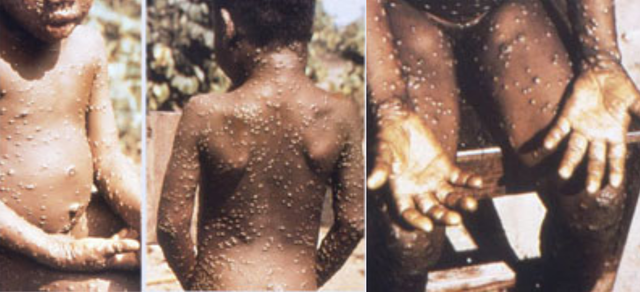
Over the course of five days, fever, headaches, muscle discomfort, and back pain are the initial signs of monkeypox.
The face, palms of the hands, and soles of the feet are next to develop rashes, followed by lesions, patches, and eventually scabs.