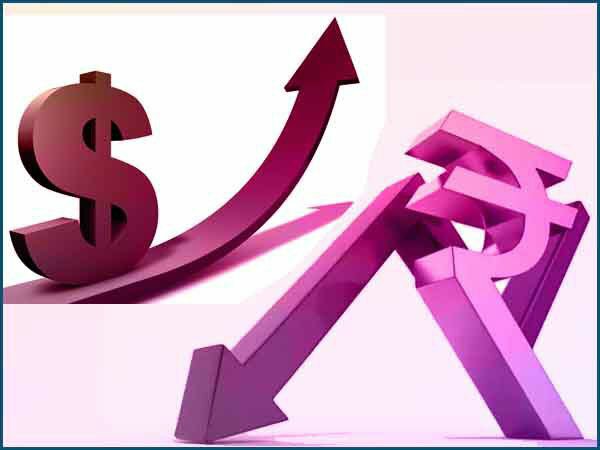
The US economy may be heading into a recession, according to an accepted indicator, after inflation there surged to a more-than-expected 40-year peak.
A widely used measure suggests that the US economy may be about to enter a recession after inflation there surged to a 40-year high that was higher than predicted, raising expectations that the Federal Reserve will raise interest rates by 100 basis points later this month.
According to data, rising prices for housing, food, and energy in June drove the US consumer price index higher than expected, to 9.1% from a year earlier.
Rising inflation raised concerns that the Federal Open Market Committee (FOMC) would raise rates by a major 100 basis points rather than the previously projected 75 basis points.
“The bottom line is US inflation momentum is rising,” noted Commonwealth Bank of Australia analyst Kristina Clifton.
“Stubbornly high inflation increases the risk that the FOMC continues to hike aggressively and triggers a recession,” she said. “We expect that recession fears will continue to support the dollar.”
According to Bloomberg, swap markets demonstrated that traders were now factoring in a high likelihood that the Fed will grant a 100-basis-point raise in July as a result of hotter-than-expected inflation statistics.
According to Shane Oliver, chief economist at AMP, “the alarming feature in the CPI statistics was the breadth of increases,” and he noted that roughly 90% of the US CPI components experienced increases of more than 3%.
Market pricing using the Fed monitoring tool of the Chicago Mercantile Exchange (CME) showed a 78% likelihood of a 100 basis point rise. Mr. Oliver, though, asserted that this could only be a hasty response to the high inflation reading.
“I think the Fed will stick to 75 – which is still a high number – if they go to 100, it will look like they are panicking. Only time will tell, though; the Fed does have an unconditional commitment to get inflation back down,’ he added.
The dollar increased as well, putting the euro below parity with the dollar for the first time in twenty years. However, Treasury yields increased across the curve, though more so at the short end.
According to Reuters, the US two-year rates, which represent short-term interest rate expectations, increased to 3.121 percent, barely off a four-week high overnight, widening the gap with the benchmark 10-year yields, which represent longer-term expectations and were at 2.9558 percent.
An inverted yield curve is defined as a decrease in longer-term debt yields below yields on the short-term debt of the same credit quality. The negative yield curve, commonly referred to as an inverted curve, has been shown to be a somewhat accurate lead indicator of a recession.
It is common knowledge that the so-called yield curve inversion, which occurs when shorter-term interest rates are higher than longer-term ones, is a sign of a recession. In early Asia, the difference between the two reached 25 basis points, which is equivalent to the difference between a 75 basis point and a 100 basis point increase in the federal funds rate.
The Treasury curve inversion level, which Bloomberg observed and added was last seen in 2007, just before the global financial crisis, has reached levels last seen in 2007. This is one of the US bond market’s most closely monitored indications of potential recession risk.
Carlos Casanova, a senior economist at UBP, told Reuters that a recession in the US would mean less demand for Asian exports, with investors turning more “risk off” and moving money out of emerging markets, and forcing Asian central banks to raise rates themselves to avoid too currency depreciation.