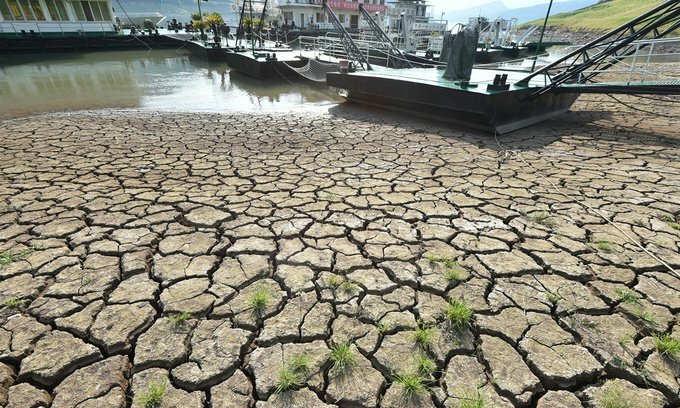
Water levels in rivers and lakes around Europe have dropped to levels few people can recall due to weeks of sweltering drought, exposing long-hidden treasures as well as some unwelcome dangers.
Archaeologists have been thrilled by the discovery of a prehistoric stone circle known as the “Spanish Stonehenge” that is often covered by the waters of a dam in Spain, which is going through its worst drought in decades.
The stone circle, formally known as the Dolmen of Guadalperal, is presently completely exposed in a corner of the Valdecanas reservoir in the central province of Caceres, where officials claim the water level has fallen to 28% of its maximum level.
Hugo Obermaier, a German archaeologist, first discovered it in 1926, but under Francisco Franco’s dictatorship, the area was submerged in 1963 for rural development.
Germany’s return of so-called “hunger stones” along the Rhine has also resurrected memories of previous droughts. Along the banks of Germany’s largest river, many of these stones have recently come into view.
The drought has caused another of Europe’s great rivers, the Danube, to drop to one of its lowest levels in nearly a century, exposing the wrecks of more than 20 German warships that were sunk during World War Two close to Serbia’s river port city of Prahovo.
A 450 kg (1,000 lb) World War Two bomb that had been sunk was found in the low-running waters of Italy’s longest river in late July, prompting the country to declare an emergency in the territories surrounding the River Po.